
Medical Course Overview
In India, the field of medical education is highly competitive and regulated by bodies like the National Medical Commission (NMC) and the Ministry of Health & Family Welfare. Medical courses open pathways for students aspiring to become doctors, surgeons, dentists, pharmacists, nurses, and allied health professionals. The primary qualification for practicing as a doctor in India is the MBBS degree, followed by postgraduate specializations such as MD, MS, and super-specialty courses like DM/M.Ch.
Major Medical Courses
- MBBS (Bachelor of Medicine and Bachelor of Surgery): A 5.5-year undergraduate program (including 1 year of internship) required to practice as a doctor.
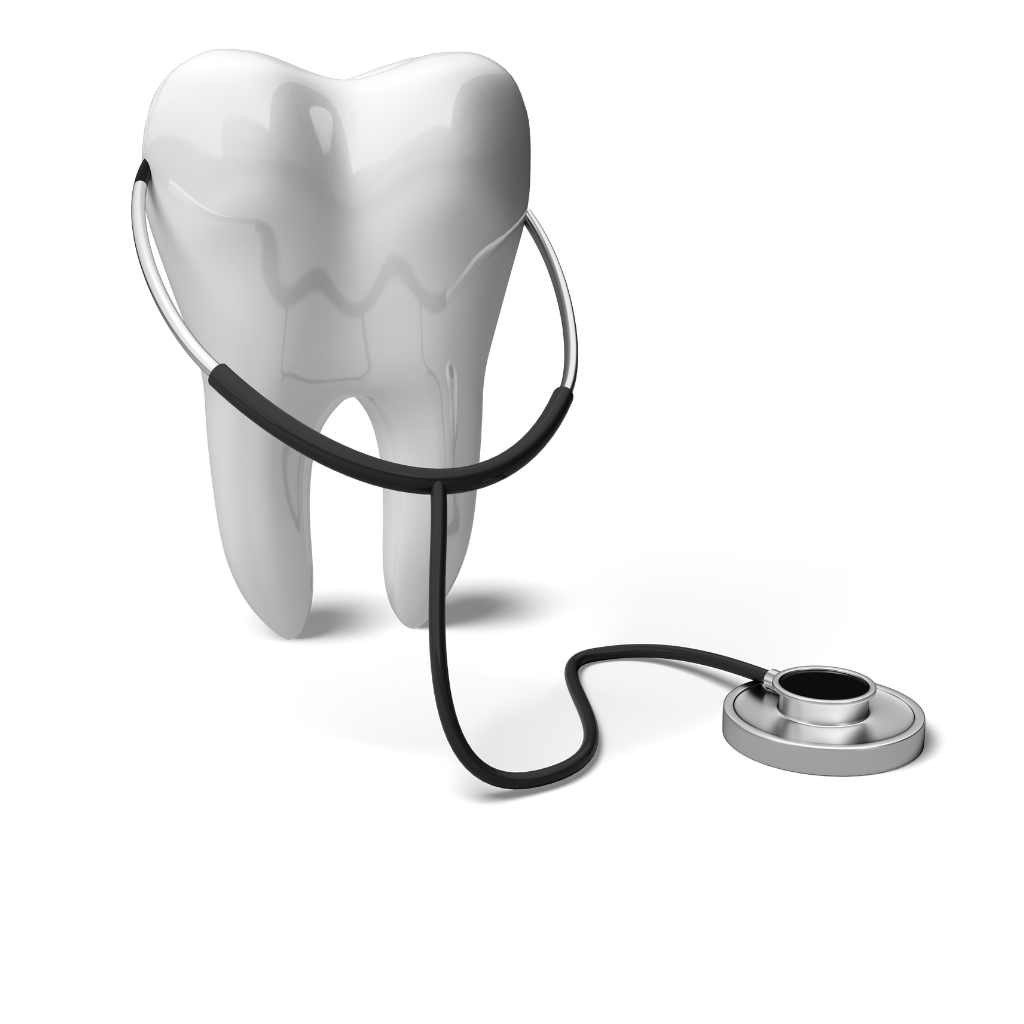
- BDS (Bachelor of Dental Surgery): A 5-year program focusing on dental sciences and oral healthcare.
- BAMS (Bachelor of Ayurvedic Medicine & Surgery): A 5.5-year program covering Ayurveda and modern medicine basics.
- BHMS (Bachelor of Homeopathic Medicine & Surgery): A 5.5-year degree program in homeopathy.
- BPT (Bachelor of Physiotherapy): A 4.5-year degree focusing on physical rehabilitation and therapy.
- Sc Nursing: A 4-year undergraduate program preparing students for nursing and healthcare services.
- Pharmacy Courses (B.Pharm/D.Pharm): Programs for careers in pharmaceutical sciences, drug research, and pharmacy practice.
- Postgraduate Medical Courses (MD/MS): 3-year specialization programs after MBBS.
- Super-Specialty Courses (DM/M.Ch): Advanced training in highly specialized fields of medicine.
Eligibility & Entrance Exams
- For MBBS/BDS: Candidates must have completed 10+2 with Physics, Chemistry, and Biology (PCB) and qualified NEET-UG.
- For Postgraduate Courses (MD/MS): MBBS graduates must qualify NEET-PG.
- For Super-Specialty Courses (DM/M.Ch): Doctors must qualify NEET-SS.
- For AYUSH courses (BAMS, BHMS, BNYS, BUMS): NEET-UG is also applicable.
Engineering Course Overview in India
Engineering is one of the most sought-after career choices in India, offering diverse opportunities in technology, infrastructure, research, and innovation. Top engineering colleges in India like IITs, NITs, IIITs, and other reputed institutes provide undergraduate, postgraduate, and doctoral programs in different branches of engineering.
Major Engineering Courses
- Tech / B.E (Bachelor of Technology / Bachelor of Engineering): A 4-year undergraduate program in core and specialized engineering fields.
- Tech / M.E (Master of Technology / Master of Engineering): A 2-year postgraduate program focusing on advanced engineering knowledge and research.
- Diploma in Engineering: A 3-year program after class 10th, providing practical technical training.
- D. in Engineering: Research-based doctoral program in advanced engineering and technology.
Popular Engineering Branches
- Computer Science & Engineering (CSE)
- Mechanical Engineering (ME)
- Civil Engineering (CE)
- Electrical & Electronics Engineering (EEE)
- Electronics & Communication Engineering (ECE)
- Information Technology (IT)
- Artificial Intelligence & Data Science (AI/DS)
- Chemical Engineering
- Aerospace Engineering
- Biotechnology
Eligibility & Entrance Exams
- Tech/B.E: 10+2 with Physics, Chemistry, Mathematics (PCM) + Entrance exams like JEE Main, JEE Advanced, state-level CETs.
- Tech/M.E: B.Tech/B.E degree + GATE exam.
- Diploma: 10th pass students eligible.
- D.: Master’s degree in Engineering/Technology + Research Entrance exam/interview.
Paramedical Course Overview
Paramedical courses in India play a vital role in the healthcare system, as they train allied health professionals who support doctors and nurses in diagnosis, treatment, and patient care. These courses are career-oriented and open great opportunities in hospitals, laboratories, diagnostic centers, and research institutions.
Major Paramedical Courses
Diploma Courses: 1–3 years (e.g., Diploma in Medical Laboratory Technology, X-Ray Technology, OT Technician, Physiotherapy, Nursing Care Assistant).
Certificate Courses: 6 months – 1 year (e.g., ECG Technician, CT Scan Technician, Dialysis Technician).
Undergraduate Courses (UG): 3–4 years (e.g., B.Sc Nursing, B.Sc in Medical Laboratory Technology, Bachelor of Physiotherapy, B.Sc Radiology).
Postgraduate Courses (PG): 2 years (e.g., M.Sc in Nursing, M.Sc in MLT, Master of Physiotherapy, M.Sc in Radiology).
Doctoral Courses (Ph.D.): 3–5 years (Research in specialized paramedical sciences).
Popular Paramedical Specializations
Nursing
Medical Laboratory Technology (MLT)
Radiology & Imaging Technology
Operation Theatre Technology (OTT)
Physiotherapy
Dialysis Technology
Optometry
Emergency & Critical Care
Audiology & Speech Therapy
Occupational Therapy
Eligibility & Entrance Exams
Certificate/Diploma: 10th or 12th pass with Science subjects.
UG Courses: 10+2 (Physics, Chemistry, Biology mandatory). Admission through merit or exams like NEET-UG, CET, state-level entrance tests.
PG Courses: UG degree in relevant stream + Entrance exam.
Ph.D.: Master’s degree + Research entrance test/interview.
Average Fees & Salary
Fees: INR 50,000 – 5 Lakhs (depending on course & institution).
Starting Salary: INR 2.5 LPA – 6 LPA, with growth up to 10–15 LPA in specialized fields.
Job Prospects
Hospitals (Government & Private)
Diagnostic Centers & Laboratories
Rehabilitation Centers
NGOs & Health Organizations
Medical Research Institutions
Abroad Opportunities in Nursing & Healthcare
Law Course Overview
Law as a career in India is one of the most respected and in-demand professions. The Bar Council of India (BCI) regulates legal education and profession. Students can pursue law right after 12th through integrated programs or after graduation through LLB, followed by higher studies like LLM or Ph.D
Major Law Courses
LLM (Master of Laws): 1–2 years postgraduate law degree pursued after completing LLB. Allows specialization in legal fields.
LLB (Bachelor of Laws): 3-year law degree pursued after graduation OR as part of a 5-year integrated program.
B.Sc LL.B: 5-year integrated program combining Science and Law subjects.
BA LL.B: 5-year integrated program blending Arts and Law subjects.
BBA LL.B: 5-year integrated program combining Business Administration and Law, ideal for corporate law.
B.Com LL.B: 5-year integrated program focusing on Commerce and Law subjects.
Eligibility Criteria
UG Law Courses: 10+2 pass (any stream) with minimum 45–50% marks. Admission via entrance exams like CLAT, AILET, LSAT, State-level exams.
LLB (3 years): Graduation in any stream with 45–50% marks.
LLM: LLB or equivalent law degree.
Ph.D. in Law: Master’s degree in Law (LLM).
Career Opportunities
Advocate (Litigation Lawyer)
Corporate Lawyer
Judge (after Judicial Services Exam)
Legal Advisor (for MNCs, PSUs, Banks)
Professor / Lecturer in Law Colleges
NGOs and Human Rights Organizations
International Law Firms & Arbitration
Average Fees & Salary
Fees: ₹2–10 Lakhs (varies with course & college)
Starting Salary: ₹4–7 LPA (can go up to ₹20–40 LPA in top corporate firms & abroad)
Nursing Course Overview
Nursing is one of the most rewarding and noble professions in India’s healthcare system. It plays a vital role in patient care, public health, and medical research. Nursing courses in India are regulated by the Indian Nursing Council (INC) and offered at diploma, undergraduate, postgraduate, and doctoral levels.
Major Nursing Courses
ANM (Auxiliary Nurse Midwifery): 2-year diploma course focusing on maternal and child healthcare.
GNM (General Nursing and Midwifery): 3.5-year diploma preparing nurses for hospital and community healthcare.
B.Sc Nursing (Basic): 4-year undergraduate degree in nursing with in-depth clinical training.
Post Basic B.Sc Nursing: 2-year course for GNM diploma holders.
M.Sc Nursing: 2-year postgraduate program specializing in advanced clinical care, education, and research.
Ph.D. in Nursing: Doctoral program in nursing education and advanced research.
Eligibility Criteria
ANM/GNM: 10+2 pass (Science/Arts/Commerce) with minimum 40–45% marks.
B.Sc Nursing: 10+2 with Physics, Chemistry, Biology (PCB) and English, minimum 45–50%.
Post Basic B.Sc Nursing: GNM completion + registration as RNRM.
M.Sc Nursing: B.Sc Nursing/Post Basic Nursing with minimum 55%.
Ph.D. Nursing: Master’s degree in Nursing with research aptitude.
Duration
ANM: 2 years
GNM: 3.5 years
B.Sc Nursing: 4 years
Post Basic B.Sc Nursing: 2 years
M.Sc Nursing: 2 years
Ph.D. in Nursing: 3–5 years
Career Opportunities
Staff Nurse (Hospitals/Clinics)
Nurse Educator / Lecturer
Community Health Nurse
Nursing Superintendent / Matron
Military Nurse (Armed Forces Medical Services)
Research Nurse
International Nursing Opportunities (UK, USA, Canada, Gulf Countries)
Average Fees & Salary
Fees: ₹1–5 Lakhs (varies with course & college)
Starting Salary: ₹3–6 LPA (in India), up to ₹20–40 LPA abroad
About Paramedical Courses
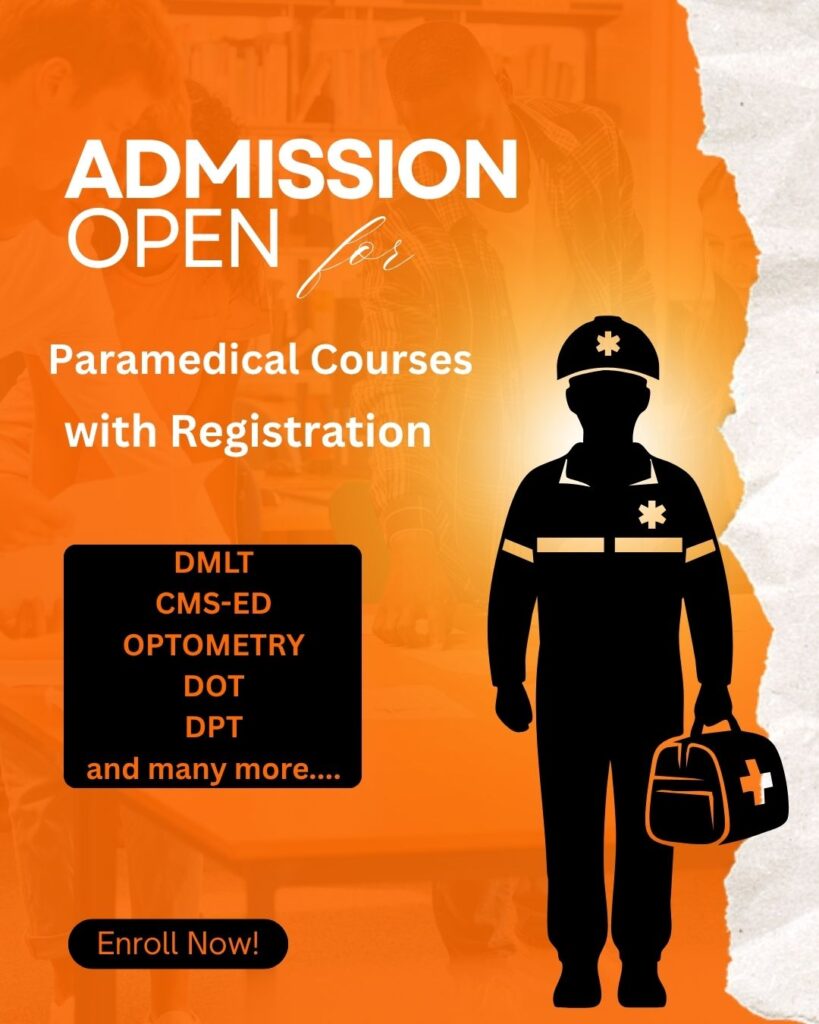
Paramedical Courses are job-oriented courses that present ample employment opportunities.
Just like Nursing Courses, Paramedical Courses offer options of varying durations.
Candidates can apply for a Certification course, Diploma course, Advanced Diploma course, and Bachelor’s degree in paramedical sciences.
All paramedical certification courses, diploma courses, and a few bachelor courses can be taken up after passing the 12th class exam.
After the covid pandemic, there has been a huge surge in the demand for paramedical professionals.
From govt. institutions to private hospitals all hire paramedical professionals.
Paramedical professionals have completely different job profiles than Nursing officers. Paramedical professionals usually operate medical equipments like XRAY Machines, MRI, CT scans, ultrasound machines.
Paramedical Courses Offered by Us
We offer Certification in Paramedical Courses, Diploma in Paramedical Courses and Bachelor in Paramedical Courses. Here we are mentioning the most demanding paramedical courses which are offered by us.
Paramedical Diploma Programs List
- Diploma in Medical Laboratory Technology-DMLT
- Diploma in Operation Theatre Technology-DOTT
- Diploma in Hospital Administration-DHA
- Diploma in Radiation Technology
- Diploma in Dialysis Technology
- Diploma in X-ray Technology
- Diploma in Nursing Care Assistant
Bachelor/B.Sc Paramedical Courses
- Bachelors in Operating Theatre Technology-BOTT
- Bachelor in Radiation Imaging Technology
- Bachelor in Nursing
- Bachelors in Physiotherapy
- BSc in Dialysis therapy
- BSc in Optometry
- BSc in Respiratory Therapy Technology
Education Course Overview
Education as a field of study focuses on training professionals to become teachers, educators, administrators, counselors, and researchers. In India, education courses are offered at diploma, undergraduate, postgraduate, and doctoral levels, regulated by institutions such as the National Council for Teacher Education (NCTE) and various universities.
Major Education Courses
D.El.Ed (Diploma in Elementary Education): 2-year diploma for primary school teachers.
B.Ed (Bachelor of Education): 2-year undergraduate professional degree for teaching at secondary and higher secondary level.
M.Ed (Master of Education): 2-year postgraduate program focusing on advanced teaching methods, administration, and research.
B.A. / B.Sc. + B.Ed (Integrated): 4-year integrated program combining subject knowledge and teaching skills.
Ph.D. in Education: 3–5 year doctoral program in education theory, policy, and research.
Eligibility Criteria
D.El.Ed: 10+2 with minimum 50% marks.
B.Ed: Graduation in any stream with minimum 50–55% marks.
M.Ed: B.Ed degree with minimum 55% marks.
Integrated B.Ed: 10+2 with 50–55% marks.
Ph.D. Education: Master’s degree in Education with research aptitude.
Duration
D.El.Ed: 2 years
B.Ed: 2 years
M.Ed: 2 years
Integrated B.Ed: 4 years
Ph.D. Education: 3–5 years
Career Opportunities
School Teacher (Primary, Secondary, Higher Secondary)
Lecturer / Professor in Colleges & Universities
Educational Administrator / Principal
Curriculum Developer
Educational Counselor
Researcher in Education & Policy Making
Corporate Trainer / EdTech Specialis
Management Course Overview
Management courses in India are designed to build leadership, strategic thinking, and decision-making skills for careers in business, administration, and entrepreneurship. From undergraduate to doctoral levels, management education is regulated by universities, autonomous institutes, and globally recognized bodies like AICTE, UGC, and IIMs.
Major Management Courses
BBA (Bachelor of Business Administration): 3-year undergraduate program.
BBM (Bachelor of Business Management): Focuses on business operations and management principles.
MBA (Master of Business Administration): 2-year postgraduate program with various specializations (Finance, Marketing, HR, Operations, IT, etc.).
PGDM (Post Graduate Diploma in Management): 2-year program offered by autonomous institutions like IIMs & XLRI.
Executive MBA/PGDM: Short-term or part-time programs for working professionals.
Ph.D. in Management: Research-focused doctoral degree (3–5 years).
Eligibility Criteria
BBA/BBM: 10+2 with minimum 50% marks.
MBA/PGDM: Graduation in any stream with minimum 50–60% marks + Entrance Exams (CAT, MAT, XAT, CMAT, GMAT).
Executive MBA: Graduation + 2–5 years of work experience.
Ph.D. in Management: Master’s degree with research aptitude.
Duration
BBA/BBM: 3 years
MBA/PGDM: 2 years
Executive MBA: 1–2 years
Ph.D. Management: 3–5 years
Career Opportunities
Business Manager
HR Manager
Marketing Manager
Financial Analyst
Operations Head
Management Consultant
Entrepreneur / Startup Founder
Corporate Trainer
International Business Specialist
Computer Application Course Overview
Computer Application courses in India are designed to prepare students for careers in software development, programming, web technologies, database management, and IT-enabled services. These courses are available at undergraduate, postgraduate, and doctoral levels, equipping students with both theoretical knowledge and practical skills in computing.
Major Computer Application Courses
DCA (Diploma in Computer Applications): 6 months – 1 year basic course.
BCA (Bachelor of Computer Applications): 3-year undergraduate program.
MCA (Master of Computer Applications): 2-year postgraduate program.
PGDCA (Post Graduate Diploma in Computer Applications): 1-year course.
Ph.D. in Computer Applications / Computer Science: 3–5 years research program.
Eligibility Criteria
DCA: 10th or 12th pass from a recognized board.
BCA: 10+2 (any stream, preferably Mathematics/Computer Science) with 50% marks.
MCA: Graduation with Mathematics as a subject at 10+2 or UG level.
PGDCA: Graduation in any stream.
Ph.D.: Master’s degree in Computer Science/Applications.
Duration
DCA: 6 months – 1 year
BCA: 3 years
MCA: 2 years
PGDCA: 1 year
Ph.D.: 3–5 years
Career Opportunities
Software Developer
Web Developer
Mobile App Developer
Database Administrator
IT Consultant
System Analyst
Network Administrator
Cybersecurity Specialist
Cloud Engineer
Researcher / Lecturer
Yoga Course Overview
ndia, being the birthplace of Yoga, offers a wide range of yoga courses that focus on physical fitness, mental well-being, meditation, and holistic health. Yoga courses are available at certificate, diploma, undergraduate, postgraduate, and doctoral levels, and are regulated by institutions like Ministry of AYUSH, UGC, and Yoga Certification Board (YCB).
Major Yoga Courses
Certificate in Yoga: Short-term courses (3–6 months).
Diploma in Yoga: 1-year program focusing on yoga practice & therapy.
BA/B.Sc. in Yoga: 3-year undergraduate program.
MA/M.Sc. in Yoga: 2-year postgraduate course in Yoga studies.
PG Diploma in Yoga Therapy: 1-year specialization in Yoga Therapy.
Ph.D. in Yoga: 3–5 years research-based program.
Eligibility Criteria
Certificate/Diploma: 10+2 or equivalent.
BA/B.Sc. Yoga: 10+2 with minimum 45–50% marks.
MA/M.Sc. Yoga: Graduation in Yoga/Science/Arts/related fields.
PG Diploma Yoga Therapy: Graduation in any discipline (Science preferred).
Ph.D. Yoga: Postgraduate degree in Yoga/related subjects.
Duration
Certificate: 3–6 months
Diploma: 1 year
BA/B.Sc.: 3 years
MA/M.Sc.: 2 years
PG Diploma: 1 year
Ph.D.: 3–5 years
Career Opportunities
Certified Yoga Instructor
Yoga Therapist
Wellness & Lifestyle Coach
Researcher / Academician in Yoga
Naturopathy and Wellness Expert
Corporate Yoga Trainer
Yoga Studio / Retreat Owner